· FocusCurve Team · Safety & Routine · 10 min read
Reviewed against FDA prescribing information, Poison Control guidance, and peer-reviewed research on ADHD memory and medication adherence.
Did I Already Take My Medication? What to Do When ADHD Memory Fails
Did you actually swallow your dose 5 minutes ago, or is your working memory hallucinating yesterday? Why automaticity creates double-dose panic and how to foolproof your routine.
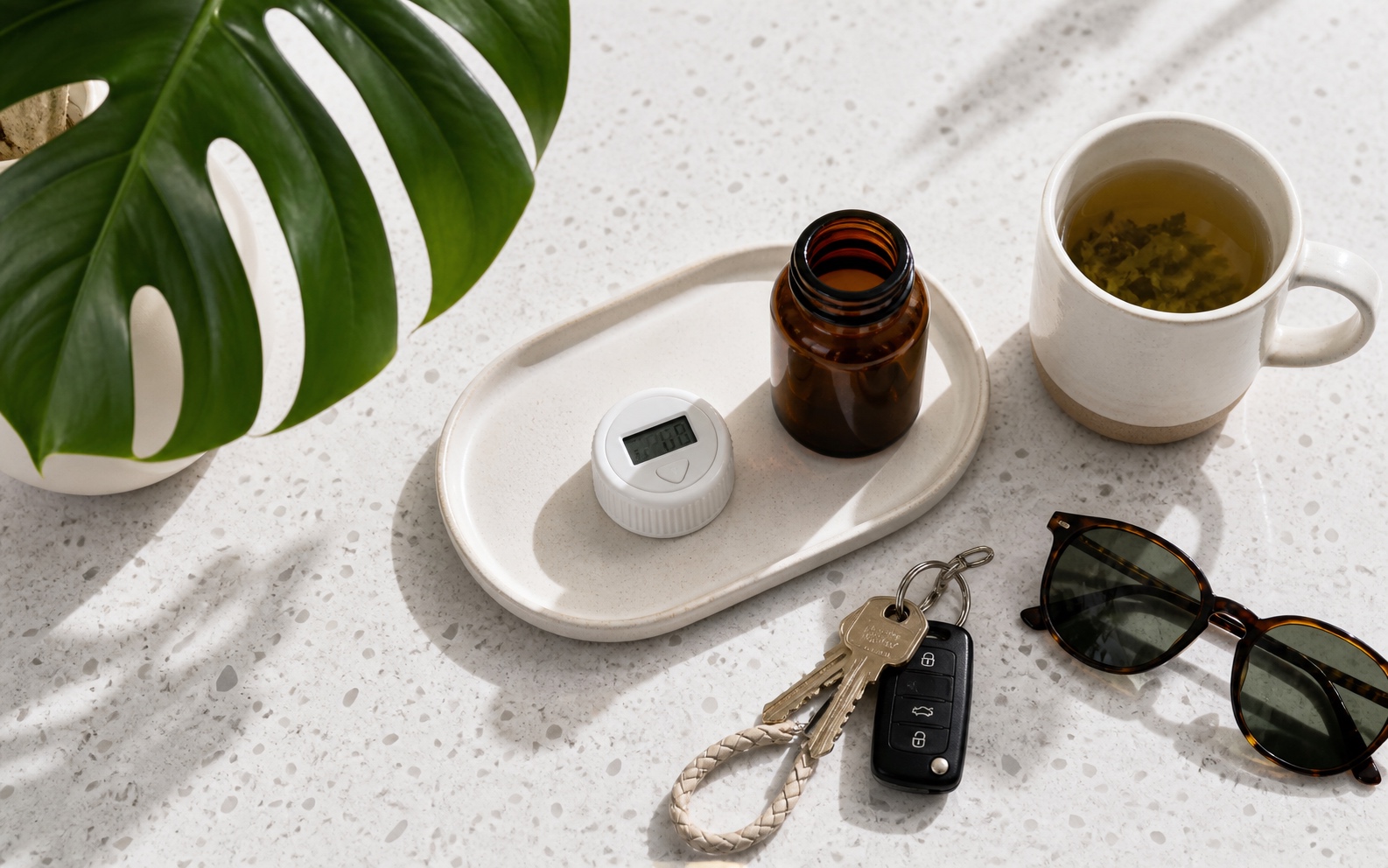
“Did I already take my medication?” is a small question with a surprisingly large amount of uncertainty behind it. You may remember opening the bottle, drinking water, and moving on with your morning—but not whether those actions happened today or yesterday. For people with ADHD, that gap is often a memory-and-routine problem, not a motivation problem.
The safety question is different from the memory question. A missed dose and an accidental double dose do not carry the same uncertainties, and the answer depends on the specific medicine and formulation. This article explains the science and the safer ways to verify a dose. It does not tell you what dose to take or replace advice from a prescriber, pharmacist, poison center, or emergency service.
Educational safety note. This article is for general education only. It is not medical advice, a prescribing instruction, or a substitute for individualized guidance. If a double dose may have happened, contact a pharmacist or Poison Control. If someone collapses, has a seizure, has trouble breathing, or cannot be awakened, call emergency services immediately.
Why can ADHD make it hard to remember taking medication?
Forgetting a morning dose is often a prospective-memory failure: the intention is to take the medicine, but the action is not reliably registered as a distinct event. Research in adults with ADHD has found particular difficulty with planning delayed intentions, while working-memory research describes problems updating what is currently relevant. That makes an automatic morning routine easy to lose track of later (Fuermaier et al.; Keage et al.).
The working-memory gap
Working memory is the limited mental workspace used to hold and update information while you are doing something else. A morning dose can compete with alarms, messages, breakfast, children, a commute, or the thought that arrived halfway through opening the bottle. If the action is interrupted, the brain may retain the intention—“I need to take it”—without a dependable record of whether the action was completed.
That is different from not caring or not trying. In a study of adults with ADHD, the largest prospective-memory difference appeared in task planning rather than simple recall: the difficult part was organizing and carrying out a delayed intention (Fuermaier et al., 2013). A medication routine asks for exactly that kind of intention to survive a busy transition.
Why automatic routines are hard to audit
Automaticity is helpful when it makes a repeated action effortless. It is less helpful when you later need to answer, “Did I do that today?” The more identical the routine feels from one day to the next, the fewer details may distinguish Tuesday’s dose from Wednesday’s. The memory is familiar, but the timestamp is missing.
That is why a bottle on the counter is not always proof. It tells you where the medication is now, not necessarily whether this morning’s dose left the bottle. A system that creates a visible state change—such as a timer cap or a flip-top marker—adds evidence outside your memory.
Why is a possible double dose a different problem from a missed dose?
A missed dose may mean less intended medication effect for that period; a double dose creates a second exposure whose effects depend on the exact drug, formulation, amount, timing, and person. Poison Control specifically lists ADHD medicines among products where double dosing can sometimes require expert assessment. There is no universal “just take it” or “just skip it” rule (Poison Control).
The tradeoff under uncertainty
When the memory is unclear, people often try to solve uncertainty by taking another dose. That can turn an unknown into a possible double dose. The opposite choice can mean the prescribed dose was missed. Neither outcome can be judged safely from a blog post because product release mechanisms, medical history, other medicines, and the time since the suspected dose all matter.
The practical distinction is simple: a feeling is not a dose record. If the decision could result in taking an additional dose, the exact product and timing belong in a conversation with a pharmacist, prescriber, or poison specialist—not in a guess based on how focused, tired, or hungry you feel.
What can the first hour tell you?
For immediate-release methylphenidate, the medication is absorbed and its plasma level begins rising during the first 30–60 minutes (stimulant formulation review), while the FDA labeling for Ritalin reports an average time to peak of about 2 hours in adults (Ritalin DailyMed label). This explains why a timeline may show an early rising phase before a noticeable peak.
It does not confirm that you took the medication. Onset varies with formulation, food, individual biology, sleep, stress, and expectations. A person can feel normal after taking a dose, or feel different for reasons unrelated to medication. Treat the 30–60-minute window as pharmacology context—not as a home test.
Onset Window: Why Lived Sensation Lags Behind the Dose (First 60 Minutes)
What should you do if a double dose may have happened?
If a double dose is possible, contact a pharmacist or Poison Control promptly with the medication container, strength, formulation, amount that may have been taken, time of each possible dose, age, weight if relevant, other medicines, and current symptoms. Poison Control uses those details to give case-specific guidance; in the United States, call 1-800-222-1222 or use poison.org (Poison Control).
While you are getting guidance
- Stop trying to reconstruct the answer from symptoms alone. Write down the last certain dose and the earliest possible time of the uncertain one.
- Keep the container and any remaining tablets nearby. Do not take additional medication, caffeine, or other stimulants while waiting for individualized guidance.
- If you have a home monitor, record pulse, blood pressure, and temperature so you can report the readings. A single reading does not establish that an exposure is safe.
- Stay somewhere calm and cool. If you are alert and able to swallow normally, keep water available and avoid becoming dehydrated; do not force large amounts of fluid.
- If there is chest pain, fainting, severe agitation or confusion, seizure, trouble breathing, collapse, inability to wake, or severe overheating, call emergency services immediately. Stimulant toxicity can involve cardiovascular and neurologic effects (methylphenidate DailyMed labeling).
What not to do
Do not induce vomiting, use ipecac, take a home “detox” remedy, exercise to “burn it off,” or wait for symptoms before seeking expert guidance. Poison Control advises against inducing vomiting and notes that help is available even when the exposure seems minor (Poison Control first-aid guidance).
The advice above is intentionally conservative and general. A poison specialist may recommend observation at home, a call to a clinician, or emergency evaluation depending on the actual exposure. Follow that case-specific guidance rather than applying a generic internet rule.
How can you verify whether you took your medication?
The strongest verification system creates a record at the moment the dose is taken. A timer cap or flip bottle supplies physical evidence; a one-tap entry in a medication timeline supplies a timestamp. Together, they reduce reliance on working memory and make it easier to answer the question later without using symptoms as a proxy.
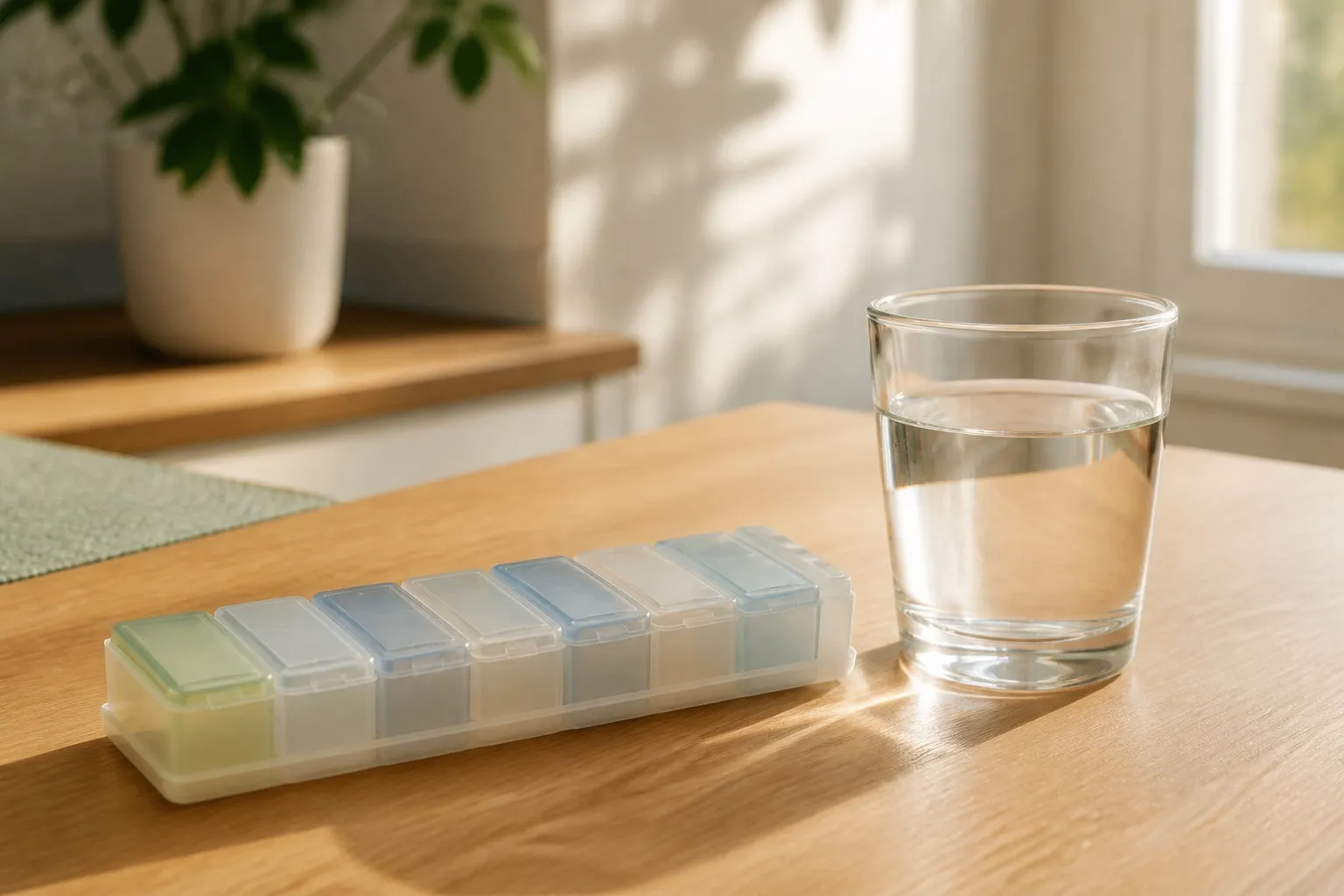
Physical verification systems
Choose one visible state change that is easy to audit:
- Timer cap: a cap that shows elapsed time since the container was opened can distinguish “opened recently” from “opened yesterday.”
- Flip bottle: turn the bottle upside down after the dose and return it upright only at the next scheduled check-in. The exact convention matters less than using the same one every day.
- Dose organizer: a dated compartment can show whether a particular scheduled dose has been removed. Keep medicines in their original labeled containers when the label or pharmacist requires it, and use child-resistant storage where needed.
- Single location: keeping the routine in one consistent place reduces the number of contexts your memory has to compare.
These tools are reminders and records, not proof of what happened inside the body. A cap can be opened without a dose being taken, and a tablet can be removed for another reason. The goal is a second source of evidence, not perfect certainty.
Digital verification in FocusCurve
FocusCurve is an iOS medication-timeline and dose-logging tool. Its 1-tap logging flow lets you record the dose time immediately after taking it, then view an estimated timeline showing when medication may be rising, peaking, and wearing off. The timeline is approximate and based on published pharmacokinetic parameters; it does not confirm an unrecorded dose, diagnose anything, or tell you what dose to take.
The simplest routine is to pair the physical action and the digital action: take the medication, log it right away, and leave the physical marker in its new state. If you want to compare your own observations with the underlying pharmacology, see How Long Does Ritalin Last? IR vs LA vs Concerta. FocusCurve keeps health records on-device without an account or health-data cloud, as described in its product information.
How do you build a medication system that remembers for you?
The most dependable routine uses an immediate cue, one physical state change, and one quick record. Medication-adherence guidance for ADHD describes forgetfulness and organization as practical barriers, while medication-safety guidance recommends a log, a consistent person responsible for each dose, and a pharmacist conversation about the best tracking method (NICE evidence review; Poison Control).
The routine can be as small as:
- Keep the medicine beside a cue that already happens every morning, such as filling a water glass.
- Make the physical marker change as part of the same action.
- Log the dose immediately in FocusCurve or a paper record.
- If the record is missing, do not invent certainty from the way you feel. Ask a pharmacist or poison specialist when an additional dose is possible.
The point is not to build a perfect productivity ritual. It is to move the question from an unreliable memory—“I think I did”—to a record you can check.
Frequently asked questions
What should I do if I am not sure whether I took my ADHD medication?
Do not try to settle the question by taking an extra dose based only on memory or how you feel. The safest answer depends on the exact medication, formulation, amount, time, symptoms, and other substances involved. Contact a pharmacist or Poison Control for case-specific guidance; in the United States, Poison Control is available at 1-800-222-1222 or poison.org.
Can I tell from how I feel whether I took my medication?
Not reliably. Immediate-release methylphenidate begins an absorption phase during the first hour, but its FDA labeling reports an average peak around 2 hours after a dose. Food, formulation, sleep, stress, and individual biology can all change how the effect feels. Symptoms are not a safe substitute for a dose record or professional guidance.
What happens if I accidentally take a double dose of ADHD medication?
The outcome depends on the exact product, amount, release mechanism, time between doses, age, health conditions, and other medicines or substances. Possible stimulant-overdose effects can include a fast or irregular heartbeat, increased blood pressure, agitation, tremor, vomiting, or overheating. Contact Poison Control or a pharmacist promptly rather than waiting for symptoms.
Can FocusCurve tell me whether I took my medication?
No. FocusCurve cannot reconstruct an unrecorded dose or confirm what happened in your body. It gives you a quick way to log a dose when you take it and shows an estimated medication timeline based on published pharmacokinetic parameters. That record can make future uncertainty less likely and give you clearer information to discuss with a healthcare professional.
The bottom line
The “did I take it?” problem is a predictable collision between ADHD-related memory demands and an automatic morning routine. The pharmacokinetic timeline may explain why an immediate-release medication can begin rising during the first hour, but neither early sensations nor later symptoms can confirm a dose. A possible double dose is product-specific: call a pharmacist or Poison Control rather than guessing.
The most useful prevention is external memory. A timer cap, flip bottle, or dated organizer creates a physical clue; a 1-tap FocusCurve log creates a time-stamped record. FocusCurve is an educational logging and estimated-timeline tool—not a medical device, prescriber, or substitute for individualized care. For more timing context, see Can’t Sleep After Taking ADHD Medication?.
References
- Fuermaier et al. — Complex Prospective Memory in Adults With ADHD (PMC3590133) pmc.ncbi.nlm.nih.gov
- Keage et al. — Working Memory Updating in ADHD (PMID 18303558) pubmed.ncbi.nlm.nih.gov
- New Formulations of Stimulants: An Update for Clinicians (PMC7207053) pmc.ncbi.nlm.nih.gov
- Ritalin FDA Prescribing Information (DailyMed) dailymed.nlm.nih.gov
- Methylphenidate Hydrochloride Oral Solution FDA Label (DailyMed) dailymed.nlm.nih.gov
- Poison Control — Double Dosing: What to Do if You Take Too Much poison.org
- Poison Control — First Aid for Poisonings poison.org
- Poison Control — ADHD Drugs: An Overview poison.org
- NICE Evidence Review — Adherence to Treatment in ADHD (PMID 35192262) pubmed.ncbi.nlm.nih.gov
Medical disclaimer
This article is for educational and informational purposes only. It is not medical advice, diagnosis, or treatment. The information presented is based on published research from FDA-approved prescribing information, peer-reviewed pharmacokinetic studies, and NCBI Bookshelf references, but it is simplified for a general audience and does not capture the full complexity of individual pharmacokinetics.
All half-lives, timelines, and percentages discussed are approximate population averages. Your individual experience may differ significantly based on your genetics, metabolism, body composition, other medications, and many other factors.
Do not start, stop, or change your medication based on this article. Always talk to your prescriber or doctor before making any changes to your treatment plan.
FocusCurve is a visualization and educational tool -- not a medical device. It does not provide medical advice, diagnosis, or treatment recommendations. All estimates shown in the app are approximate, based on generalized models and published population-average parameters.
- Safety
- Routine
- Dose Tracking
- ADHD Memory