· FocusCurve Team · Sleep & Clearance · 16 min read
Reviewed against FDA prescribing information, peer-reviewed pharmacokinetic studies, and NCBI Bookshelf references.
Can't Sleep on ADHD Medication? Science-Backed Sleep Strategies
Lying wide awake at midnight with a racing mind? Why late plasma clearance delays sleep architecture, and how to track your evening clearance curve before bedtime.
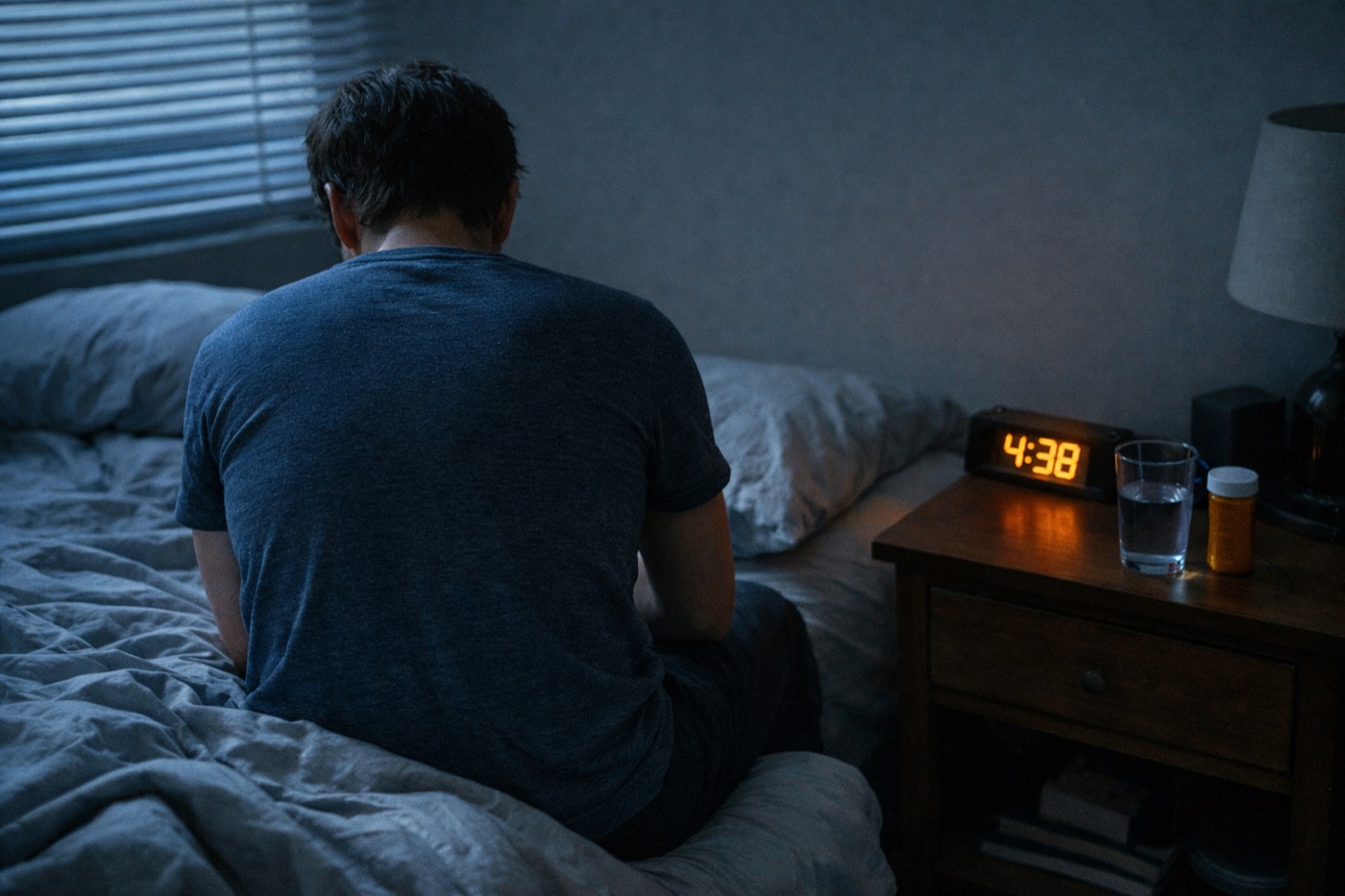
It is 1 AM. You took your Concerta twelve hours ago. Your body is exhausted, but your brain will not stop. You have tried every position, counted backwards from a hundred twice, and checked the time four times. Sound familiar?
If you take stimulant medication for ADHD and struggle with sleep, you are in large company. Research suggests that 44.4% of adults with ADHD meet criteria for insomnia disorder (Fadeuilhe et al., 2021), and sleep difficulty is one of the most commonly reported side effects of stimulant medications in FDA clinical trials. But the relationship between ADHD medication and sleep is more nuanced than “stimulants keep you awake” — and understanding that nuance can help you figure out what is actually going on and what to do about it.
This article covers what published research says about why stimulant medications affect sleep, how different formulations compare, and which evidence-based strategies have been studied in controlled trials. Every data point is cited to a primary source — FDA labels, peer-reviewed studies, or NCBI reference works.
For background on how different methylphenidate formulations work and how long they last, see our companion article: How Long Does Ritalin Last? IR vs LA vs Concerta. For the specific interaction between caffeine and ADHD medication, see Caffeine and ADHD Medication: What Actually Happens.
⚡ 10-Second ADHD Sleep Checklist (What to check first):
- Dose taken after 8:00 AM? An extended-release pill taken at 10:00 AM is still actively circulating at midnight.
- Afternoon coffee or tea? Caffeine has a 5-hour half-life; that 3:00 PM latte is 50% active at 8:00 PM and 25% active at 1:00 AM.
- Brain racing with new ideas? Untreated ADHD rebound can cause insomnia just as often as active medication.
Why stimulant medications affect sleep
ADHD stimulant medications work by increasing the availability of two neurotransmitters in the brain: dopamine and norepinephrine. This is what produces the improved focus, reduced impulsivity, and increased task persistence that make these medications effective for ADHD. But both of these neurotransmitters are also involved in promoting wakefulness.
Dopamine plays a key role in the brain’s arousal systems. Norepinephrine activates the sympathetic nervous system — the body’s “alert mode.” When a stimulant medication elevates both of these simultaneously, it becomes harder for the brain to transition into the low-arousal state needed for sleep onset.
This is not a side effect in the sense that something has gone wrong. It is a predictable consequence of the same mechanism that makes the medication work. The therapeutic effect (increased alertness and focus during the day) and the unwanted effect (difficulty sleeping at night) are two sides of the same pharmacological coin.
The critical question is not whether a stimulant promotes wakefulness — by definition, it does — but whether the medication has cleared sufficiently by the time you want to sleep. And that depends on which medication you take, when you take it, and how quickly your body metabolizes it.
Which medications cause the most sleep problems
Not all ADHD medications are equal when it comes to sleep. The FDA requires pharmaceutical companies to report adverse event rates from clinical trials, and the differences between formulations are substantial.
| Medication | Type | Children | Adolescents | Adults | Placebo (adults) |
|---|---|---|---|---|---|
| Concerta | Methylphenidate ER | 3% | — | 12% | 6% |
| Ritalin LA | Methylphenidate ER | 3.1% | — | —* | — |
| Adderall XR | Mixed amphetamine salts | 17% | 12% | 27% | 13% |
| Vyvanse | Lisdexamfetamine | 23% | 13% | 27% | 8% |
Sources: FDA prescribing information via DailyMed for Concerta, Ritalin LA, Adderall XR, and Vyvanse. *The Ritalin LA prescribing information does not report adult-specific insomnia rates. Note that these rates come from separate clinical trials with different protocols, populations, and assessment methods, so direct comparison across medications has limitations.
With that caveat, the pattern is consistent: amphetamine-based medications (Adderall XR, Vyvanse) show substantially higher insomnia rates than methylphenidate-based medications. In adults, the difference is roughly twofold — 27% versus 12%.
Insomnia rates in adults: FDA clinical trial data
There is an important caveat here: these are rates from controlled clinical trials with specific dosing protocols. Your individual experience depends on your dose, timing, metabolism, and many other factors. But the overall pattern — amphetamines cause more insomnia than methylphenidate — is consistent and reflects the underlying pharmacology.
Dose matters too
Within each medication class, higher doses are associated with more sleep problems. Data reviewed by Stein et al. (2012) showed that lisdexamfetamine-related insomnia increased from approximately 2% (placebo) to 15% (30 mg) to 16% (50 mg) to 25% (70 mg). Becker et al. (2016) found that 24.6% of children experienced clinically significant sleep problems at the highest methylphenidate dose, compared to 10% at baseline. A meta-analysis by Kidwell et al. (2015) confirmed the overall pattern in youth: stimulant medications significantly reduce total sleep duration, increase time to fall asleep, and decrease sleep efficiency.
The half-life connection
The insomnia rate differences between methylphenidate and amphetamine formulations are not random — they directly reflect how long each molecule stays in your body.
| Medication | Active molecule half-life | Clinical duration | Source |
|---|---|---|---|
| Ritalin IR | ~2.5–3.5 h | 3–4 hours | Ritalin LA FDA label |
| Concerta (OROS) | ~3.5 h | 10–12 hours | Concerta FDA label |
| Adderall XR | d-amph: ~10 h; l-amph: ~13 h | 10–12 hours | Adderall XR FDA label |
| Vyvanse | d-amph: ~10 h | 10–14 hours | Adderall XR FDA label (d-amph pharmacology) |
The key distinction: Concerta and Adderall XR have similar clinical durations (10–12 hours), but the underlying molecules clear at very different rates. Methylphenidate’s half-life of approximately 3.5 hours means that once the Concerta delivery system stops releasing medication, levels drop relatively quickly. Amphetamine’s half-life of 10–13 hours means levels decline much more slowly — the molecule is still present in significant amounts many hours after the clinical effect has nominally ended.
This is why two people can both take their medication at 7 AM, both experience 10–12 hours of therapeutic benefit, and yet one sleeps fine at 10 PM while the other is staring at the ceiling until midnight. The first person’s methylphenidate has dropped to very low levels. The second person’s amphetamine is still clearing.
Evening clearance: methylphenidate vs. amphetamine after a 7 AM dose
Note on “clinical duration” vs. clearance: A medication’s clinical duration (how long you feel it working) is not the same as how long the molecule is present in your body. Concerta’s 10–12-hour clinical duration comes from its OROS delivery system releasing methylphenidate over time — but once release ends, the short half-life means rapid clearance. Adderall XR’s similar clinical duration comes from two pulses of amphetamine — but the long half-life means the molecule lingers well beyond the clinical window. For sleep, it is the clearance that matters.
The paradox: ADHD itself disrupts sleep
Here is something that complicates the picture considerably: ADHD itself is strongly associated with sleep problems, independent of medication. Blaming your medication for sleep difficulties may be partially or entirely wrong.
A meta-analysis by Cortese et al. (2009), covering 16 studies with over 1,300 participants, found that unmedicated children with ADHD showed significantly greater sleep onset difficulties, bedtime resistance, night awakenings, and reduced sleep efficiency compared to controls — measured both subjectively and objectively. The meta-analysis excluded medicated children, which means these sleep problems exist independent of stimulant treatment.
In adults, the picture is even more striking. Sobanski et al. (2008) conducted polysomnography (the gold standard of sleep measurement) on adults with ADHD before and during methylphenidate treatment. Before treatment, ADHD adults had significantly worse sleep than controls: more nocturnal awakenings (32 vs. 12, p<0.0001), reduced sleep efficiency (85% vs. 89.4%), and less REM sleep (17.9% vs. 21.8%).
The paradoxical finding: when a subgroup of these adults (n=10) started methylphenidate, their sleep improved. Sleep onset latency dropped from 40.4 minutes to 12.7 minutes (p=0.024), and sleep efficiency increased from 82% to 89.5% (p=0.035). This was an open-label comparison (not placebo-controlled) with a small sample, so the evidence should be interpreted cautiously — but it suggests that for some adults, the stimulant medication did not disrupt sleep but rather improved it by treating the underlying ADHD.
Fadeuilhe et al. (2021)
found the same pattern in a larger sample: stimulant treatment was associated with lower insomnia rates compared to untreated ADHD. Longer periods of stable treatment were associated with even lower rates.
What this means for you: If you had sleep problems before starting medication, your medication may not be the cause — or at least not the only cause. ADHD-related racing thoughts, difficulty “shutting off” the brain, and irregular sleep-wake patterns are sleep disruptors in their own right. For some people, effective ADHD treatment is itself the best sleep intervention.
The caffeine factor
If you take ADHD medication and also drink coffee, tea, or energy drinks, caffeine may be contributing to your sleep problems more than you realize — and potentially more than your medication is.
Caffeine has an average half-life of approximately 5 hours (range 1.5–9.5 hours), which is longer than methylphenidate’s half-life of approximately 3.5 hours. This means that for many people on methylphenidate-based medications, caffeine is the substance still elevated at bedtime, not the medication. We covered this in detail in our article on caffeine and ADHD medication.
A landmark study by Drake et al. (2013) gave participants 400 mg of caffeine (roughly two large coffees) at three different times: at bedtime, 3 hours before bed, and 6 hours before bed. The result: caffeine consumed even 6 hours before bed still reduced total sleep time by approximately one hour and produced measurably more wakefulness during the night.
Beyond just falling asleep, Baur et al. (2024) demonstrated that caffeine suppresses EEG delta activity — a marker of restorative deep sleep — even at levels low enough to allow sleep onset. So you might fall asleep, but the quality of that sleep may be compromised.
For someone taking ADHD stimulant medication, caffeine adds a second stimulant on top of the first. Both are metabolized by different enzymes and do not interact pharmacokinetically, but their wakefulness-promoting effects stack. If you are having sleep problems and also consuming caffeine in the afternoon or evening, the caffeine may be as much or more of the problem as your medication.
What actually helps
There is a meaningful body of research on managing sleep problems in people taking ADHD stimulant medications. The strategies below are not generic sleep tips — they are approaches that have been specifically studied in ADHD populations, often in people taking stimulants.
Sleep hygiene: the unsexy foundation
Weiss et al. (2006)
studied 27 stimulant-treated children with initial insomnia and found that sleep hygiene education alone (consistent bedtime routine, reduced screen exposure, controlled sleep environment) resolved insomnia in 5 of 27 children, with an effect size of 0.67. That is a moderate effect from behavioral changes alone, before any additional intervention.
Sleep hygiene is not glamorous and it is frequently dismissed by people who feel they have “tried everything.” But the research suggests it provides a meaningful baseline improvement, particularly when the sleep hygiene practices are specific and consistently applied rather than vague suggestions to “try relaxing before bed.”
Melatonin: the most-studied intervention
Melatonin is the most-studied sleep intervention specifically in ADHD populations on stimulant medication. The evidence from randomized controlled trials is generally positive:
- Van der Heijden et al. (2007) — 105 medication-free children with ADHD and chronic sleep-onset insomnia: melatonin (3–6 mg) advanced sleep onset by approximately 27 minutes versus placebo (p<0.0001) and increased total sleep time by approximately 20 minutes (p=0.01). It also shifted the body’s internal clock (dim light melatonin onset) forward by 44 minutes. (Note: these children were not taking stimulant medication, so the results may not directly apply to stimulant-induced insomnia.)
- Weiss et al. (2006) — 27 stimulant-treated children: combining sleep hygiene with 5 mg melatonin produced an effect size of 1.7 and approximately 60 minutes of improvement in sleep onset, substantially more than either intervention alone.
- Surman & Walsh (2021) reviewed evidence for low-dose melatonin (0.5 mg) timed to dim light melatonin onset, which alone advanced the circadian phase by approximately 1 hour 28 minutes. When combined with morning bright light therapy, the advance reached approximately 1 hour 58 minutes.
Two important points about melatonin: timing matters as much as dose, and lower doses may be more effective than higher ones for circadian resetting. A large dose taken immediately before bed acts primarily as a mild sedative. A smaller dose taken 4–6 hours before bed works on the circadian clock itself, shifting your natural sleep onset earlier. These are different mechanisms with different results, and your prescriber can advise on which approach makes more sense for your situation.
CBT-I: cognitive behavioral therapy for insomnia
A review by Surman & Walsh (2021) examined CBT-I adapted for ADHD adults. In a cited trial, group CBT-I sessions over 10 weeks showed that insomnia severity decreased significantly (p=0.002 at post-treatment, p<0.0001 at follow-up). The ADHD-specific adaptations included external supports — calendars, alarms, reminders — to compensate for the executive dysfunction that can make behavioral interventions harder to maintain.
CBT-I addresses the cognitive and behavioral patterns that sustain insomnia (catastrophizing about sleep loss, spending too long in bed, inconsistent sleep schedules) and has the advantage of treating the insomnia itself rather than managing a symptom.
Bright light therapy
Three controlled studies reviewed by Surman & Walsh (2021) (96 total participants) found that morning bright light therapy advanced sleep timing in ADHD adults and also improved ADHD symptoms. Combined with low-dose melatonin in the evening, this approach advanced the circadian clock by nearly two hours.
Caffeine timing
Based on the Drake et al. (2013) data, a minimum 6-hour caffeine cutoff before bed is supported by evidence, though even this may not be sufficient for slow caffeine metabolizers. If your caffeine half-life is extended by oral contraceptives (approximately doubled) or other factors, you may need an even earlier cutoff. See our caffeine and ADHD medication article for a detailed breakdown of what affects your personal caffeine half-life.
FocusCurve is built for this. The app models your estimated medication and caffeine timelines together, showing when both substances are expected to clear to low levels. Instead of guessing whether your afternoon coffee or your morning medication is the one keeping you up, you can see the estimated answer on a personalized timeline. Learn more about FocusCurve.
When to talk to your prescriber
Some degree of sleep adjustment is normal when starting or changing ADHD medication. Stein et al. (2012) noted that insomnia reports were most common during the first week of treatment. Fadeuilhe et al. (2021) found that stimulant-related insomnia generally diminished after approximately 2 months of stable treatment.
However, you should talk to your prescriber if:
- Sleep problems persist beyond the first 2 months of stable treatment at the same dose
- You are regularly taking more than 30 minutes to fall asleep and this is affecting your daytime functioning
- You notice a pattern of rebound symptoms — increased restlessness or racing thoughts specifically in the hours when your medication is wearing off
- You are using caffeine, alcohol, or over-the-counter sleep aids to manage the cycle of stimulant-related wakefulness and subsequent fatigue
- Your sleep problems preceded your ADHD medication — this suggests the insomnia may be ADHD-related rather than medication-related, which changes the approach
Your prescriber has several options that are not available to you on your own: adjusting the dose, switching formulations (methylphenidate vs. amphetamine), changing timing, adding a short-acting dose to manage rebound, or considering a non-stimulant alternative. These are clinical decisions that require your full medical picture.
Frequently asked questions
Why can't I sleep after taking my ADHD medication?
Stimulant ADHD medications (methylphenidate, amphetamine) work by increasing dopamine and norepinephrine in the brain, which promotes wakefulness. If the medication has not sufficiently cleared by bedtime, these elevated neurotransmitter levels can delay sleep onset. The likelihood of this depends on your specific medication, its half-life, when you took it, and your individual metabolism. Amphetamine-based medications (Adderall XR, Vyvanse) have longer half-lives (9 to 14 hours) than methylphenidate (approximately 3.5 hours), which is why they are more commonly associated with insomnia in FDA clinical trial data.
How long before bed should I take my last dose of ADHD medication?
There is no single answer because it depends on your medication type, formulation, and individual metabolism. All FDA labels for extended-release stimulants recommend morning dosing and specifically advise avoiding afternoon doses due to insomnia risk. For methylphenidate IR (which lasts 3 to 4 hours), a dose taken 6 or more hours before bedtime has generally cleared. For extended-release formulations like Concerta (10 to 12 hours) or Adderall XR (peak at 7 hours, half-life 10 to 13 hours), morning dosing is standard. If you are consistently having trouble sleeping, discuss the timing with your prescriber rather than adjusting it on your own.
Is melatonin safe to take with ADHD stimulant medication?
Several randomized controlled trials have studied melatonin in children and adolescents taking ADHD stimulant medication.
Van der Heijden et al. (2007)
found that 3 to 6 mg of melatonin advanced sleep onset by approximately 27 minutes compared to placebo.
Weiss et al. (2006)
found that combining sleep hygiene education with 5 mg melatonin produced approximately 60 minutes of improvement in sleep onset. Side effect profiles were comparable to placebo in these studies. However, melatonin dosing and timing matter, and you should discuss it with your prescriber or doctor before adding it to your routine.
Will my sleep problems from ADHD medication get better over time?
For many people, yes. Research by Fadeuilhe et al. (2021) found that stimulant-related insomnia tends to diminish after approximately 2 months of stable treatment, and that longer periods of stable treatment were associated with lower rates of insomnia disorder. Stein et al. (2012) also noted that insomnia reports were most common during the first week of treatment for both lisdexamfetamine and amphetamine salts. However, if sleep problems persist beyond the initial adjustment period, this is worth discussing with your prescriber, as dose, timing, or formulation adjustments may help.
References
- Stein MA, Weiss M, Hlavaty L. ADHD Treatments, Sleep, and Sleep Problems: Complex Associations. Neurotherapeutics. 2012;9(3):509-517. pmc.ncbi.nlm.nih.gov
- Becker SP, Froehlich TE, Epstein JN. Effects of Methylphenidate on Sleep Functioning in Children with ADHD. J Dev Behav Pediatr. 2016;37(5):395-404. pmc.ncbi.nlm.nih.gov
- Fadeuilhe C, et al. Insomnia Disorder in Adult ADHD Patients: Clinical, Comorbidity, and Treatment Correlates. Front Psychiatry. 2021;12:663889. pmc.ncbi.nlm.nih.gov
- Kidwell KM, et al. Stimulant Medications and Sleep for Youth With ADHD: A Meta-analysis. Pediatrics. 2015;136(6):1144-1153. pubmed.ncbi.nlm.nih.gov
- Sobanski E, et al. Sleep in adults with ADHD before and during treatment with methylphenidate: a controlled polysomnographic study. Sleep. 2008;31(3):375-381. pmc.ncbi.nlm.nih.gov
- Cortese S, et al. Sleep in children with ADHD: meta-analysis of subjective and objective studies. J Am Acad Child Adolesc Psychiatry. 2009;48(9):894-908. pubmed.ncbi.nlm.nih.gov
- Drake C, et al. Caffeine effects on sleep taken 0, 3, or 6 hours before going to bed. J Clin Sleep Med. 2013;9(11):1195-1200. pmc.ncbi.nlm.nih.gov
- Baur DM, et al. Concentration-effect relationships of plasma caffeine on EEG delta power during human sleep. J Sleep Res. 2024;33(5):e14140. onlinelibrary.wiley.com
- Van der Heijden KB, et al. Effect of melatonin on sleep, behavior, and cognition in ADHD and chronic sleep-onset insomnia. J Am Acad Child Adolesc Psychiatry. 2007;46(2):233-241. pubmed.ncbi.nlm.nih.gov
- Weiss MD, et al. Sleep hygiene and melatonin treatment for children and adolescents with ADHD and initial insomnia. J Am Acad Child Adolesc Psychiatry. 2006;45(5):512-519. pubmed.ncbi.nlm.nih.gov
- Surman CBH, Walsh DM. Managing Sleep in Adults with ADHD: From Science to Pragmatic Approaches. Brain Sci. 2021;11(10):1361. pmc.ncbi.nlm.nih.gov
- Concerta (methylphenidate HCl) prescribing information. dailymed.nlm.nih.gov
- Ritalin LA (methylphenidate HCl) prescribing information. dailymed.nlm.nih.gov
- Adderall XR (mixed amphetamine salts) prescribing information. dailymed.nlm.nih.gov
- Vyvanse (lisdexamfetamine dimesylate) prescribing information. dailymed.nlm.nih.gov
Medical disclaimer
This article is for educational and informational purposes only. It is not medical advice, diagnosis, or treatment. The information presented is based on published research from FDA-approved prescribing information, peer-reviewed pharmacokinetic studies, and NCBI Bookshelf references, but it is simplified for a general audience and does not capture the full complexity of individual pharmacokinetics.
All half-lives, timelines, and percentages discussed are approximate population averages. Your individual experience may differ significantly based on your genetics, metabolism, body composition, other medications, and many other factors.
Do not start, stop, or change your medication based on this article. Always talk to your prescriber or doctor before making any changes to your treatment plan.
FocusCurve is a visualization and educational tool -- not a medical device. It does not provide medical advice, diagnosis, or treatment recommendations. All estimates shown in the app are approximate, based on generalized models and published population-average parameters.
- Sleep
- Insomnia
- Half-Life
- Melatonin