· FocusCurve Team · Caffeine & Sleep · 14 min read
Reviewed against NCBI Bookshelf references, peer-reviewed pharmacokinetic studies, and FDA prescribing information.
Caffeine and ADHD Medication: Timing, Interactions, and Sleep
Why does an afternoon espresso spike stimulant anxiety and ruin deep sleep 10 hours later? The hidden liver enzyme bottleneck between caffeine and prescription stimulants.
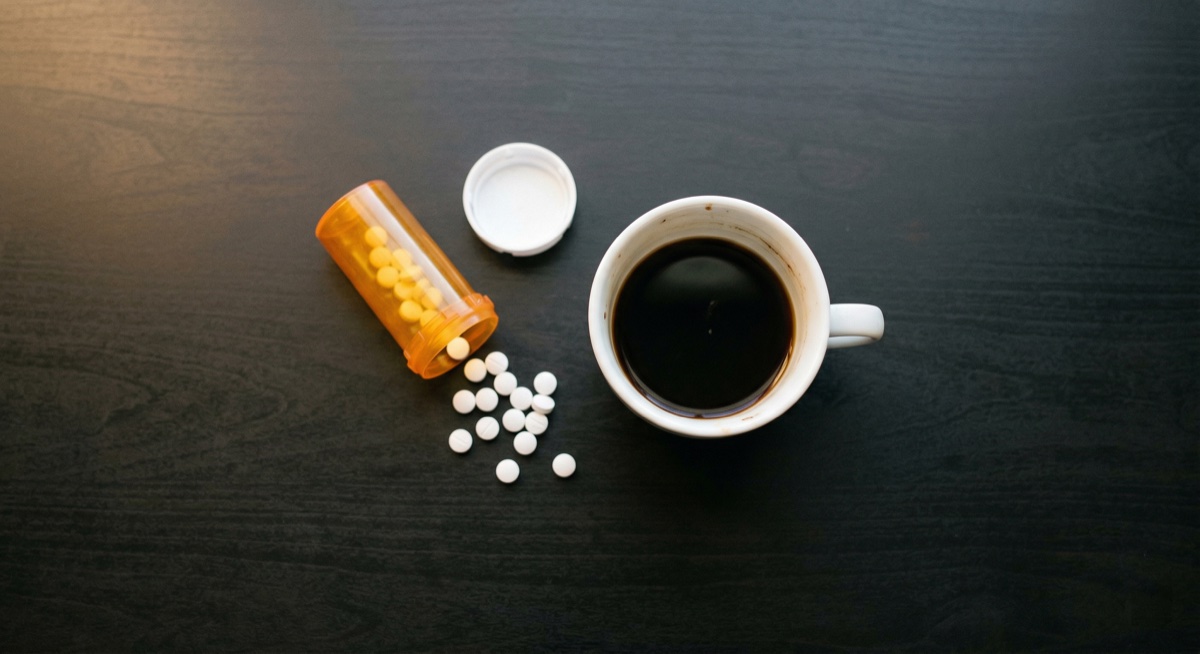
“Can I drink coffee on my ADHD medication?” It might be the single most common question in ADHD communities online. If you have ever typed this into a search bar, scrolled through Reddit threads at midnight, or nervously asked your pharmacist while picking up your Concerta, you are not alone.
The answer is not a simple yes or no. Caffeine and ADHD stimulant medications are both central nervous system stimulants, and understanding how they interact — and when they do not interact — requires looking at the actual science rather than relying on vague rules of thumb. This article walks through what published research says about caffeine’s behavior in your body, why combining it with ADHD medication matters most for sleep, and the personal factors that can dramatically change your caffeine timeline.
Every pharmacokinetic parameter in this article is cited to a primary source. Where we reference community reports and anecdotal experiences, we label them as such. For a detailed breakdown of how different methylphenidate formulations work and how long they last, see our companion article: How Long Does Ritalin Last? IR vs LA vs Concerta.
⚡ 10-Second ADHD Caffeine Cutoff Benchmarks:
- Morning Boost (07:00–09:00): Works smoothly for most; helps jumpstart alertness while medication reaches its first peak.
- The 12:00 PM Golden Cutoff: Because caffeine takes ~5 hours to drop by half, keeping your last cup before noon protects evening wind-down.
- The 2:00 PM Trap: An espresso at 2:00 PM is still 50% active at 7:00 PM and 25% active at midnight — suppressing deep restorative delta sleep.
Does caffeine actually interact with ADHD stimulants?
This is the question that drives the most anxiety, so let us address it directly: caffeine and methylphenidate do not interact pharmacokinetically. They are metabolized by entirely different enzyme systems and do not compete for or inhibit each other’s breakdown.
Methylphenidate is primarily broken down by carboxylesterase 1 (CES1), a liver enzyme that hydrolyzes the drug into ritalinic acid, its inactive metabolite (PharmGKB Methylphenidate Pathway, PMC6581573). Caffeine, on the other hand, is metabolized almost entirely by CYP1A2, a cytochrome P450 enzyme that converts it to paraxanthine, theobromine, and theophylline (NCBI NBK223808).
Because these are separate enzymatic pathways, drinking coffee does not make your Ritalin break down faster or slower. And taking Ritalin does not change how quickly your body clears caffeine. There is no metabolic tug-of-war happening between them.

Then why does it feel like they interact?
Because the interaction is pharmacodynamic, not pharmacokinetic. In plain English: the drugs do not affect each other’s metabolism, but their effects add together in your body.
Methylphenidate works primarily by increasing dopamine and norepinephrine availability in the brain. Caffeine works primarily by blocking adenosine receptors — the receptors that accumulate sleepiness signals throughout the day. Both of these mechanisms result in increased central nervous system stimulation: higher alertness, faster heart rate, and increased sympathetic nervous system activity.
When you take both, you get the stimulant effect of your medication plus the stimulant effect of caffeine. For some people, that combined load stays within a comfortable range. For others, it pushes past the threshold into jitteriness, anxiety, or a racing heart. This is not a drug interaction in the clinical sense — it is two stimulants doing exactly what stimulants do, at the same time.
The same principle applies to amphetamine-based medications. Adderall and Vyvanse are also metabolized through different pathways than caffeine (primarily CYP2D6 for amphetamine). The pharmacodynamic stacking of stimulant effects is the same regardless of which ADHD medication you take.
How caffeine works in your body
To understand why caffeine timing matters so much — especially when you are also taking ADHD medication — it helps to understand a few basic facts about how caffeine moves through your system.
Absorption: fast and nearly complete
Caffeine is absorbed remarkably quickly and almost completely. When you drink a cup of coffee on an empty stomach, caffeine reaches its peak level in approximately 30 to 60 minutes (NCBI NBK223808; Magkos & Kavouras, 2005). Its bioavailability is approximately 99% — meaning almost everything you drink gets absorbed (NCBI NBK223808; Blanchard & Sawers, 1983).
For comparison, methylphenidate has a bioavailability of only about 22–30% (as discussed in our Ritalin article). Caffeine is in a different league: essentially every milligram you consume reaches your system.
Eating food with your coffee does not reduce the total amount of caffeine absorbed — it remains at approximately 99%. What food does is slow the rate of absorption, delaying the peak by shifting when caffeine enters your intestines (Brachtel & Richter, 1988). So a coffee with breakfast hits a bit later than a coffee on an empty stomach, but the total caffeine in your system ends up the same.
The half-life: where things get interesting
Caffeine’s average elimination half-life in healthy adults is approximately 5 hours, with a wide individual range of 1.5 to 9.5 hours (NCBI NBK223808; StatPearls, NBK519490). That range is enormous — a sixfold difference between the fastest and slowest metabolizers.
What does a 5-hour half-life look like in practice? Here is the simple math for a coffee consumed at 2 PM, assuming the population-average half-life:
| Time | Hours after coffee | Approximate caffeine remaining |
|---|---|---|
| 2:30 PM | 0.5 h | Approaching peak (absorption still underway) |
| 7:00 PM | 5 h | ~50% remaining |
| 12:00 AM | 10 h | ~25% remaining |
| 5:00 AM | 15 h | ~12.5% remaining |
Caffeine remaining after a 2 PM coffee (5-hour half-life)
That 2 PM coffee is not just “afternoon caffeine.” A quarter of it is still circulating at midnight. And if your personal half-life is longer than average — as it is for many people — the math gets worse.
Higher doses mean longer half-lives
Here is a detail most people do not know: caffeine’s half-life is dose-dependent. At lower doses, the half-life tends to be shorter (approximately 4 hours), while at higher doses it stretches longer (up to approximately 8.7 hours) (NCBI NBK532910).
This means that your third cup of coffee does not just add more caffeine — it may also slow down the elimination of all the caffeine already in your system. The more you drink, the longer each milligram takes to clear. This is especially relevant if you are someone who drinks large volumes of coffee or switches to an energy drink with a higher caffeine load later in the day.
Volume of distribution: caffeine goes everywhere
Caffeine has a volume of distribution of approximately 0.7 L/kg (NCBI NBK223808), meaning it distributes fairly evenly throughout your body water. For a 70 kg person, that is about 49 liters — essentially your entire body. Caffeine crosses the blood-brain barrier readily, which is why its effects on alertness and sleep are so pronounced.
The sleep equation — why timing matters
Sleep disruption is, by a wide margin, the most significant practical concern when combining caffeine with ADHD stimulant medication. Research on ADHD and sleep consistently documents high rates of sleep difficulty in medicated adults (PMC3441938). Adding caffeine’s long half-life into the mix can make a manageable situation considerably worse.

Your sleep window depends on whichever substance clears last
Both your ADHD medication and caffeine need to drop below certain levels before your body is ready to sleep. Your actual sleep window is not determined by either substance alone — it is determined by whichever one is still elevated later in the evening.
For many people taking a morning dose of extended-release methylphenidate, the medication has cleared sufficiently by evening. If you take Concerta at 7 AM, its 10-to-12-hour clinical duration puts the tail end at around 5–7 PM, and the molecule’s clearance continues from there (see our Ritalin duration guide for the specifics of each formulation).
But caffeine operates on its own, independent timeline. And because it has a longer half-life than methylphenidate (approximately 5 hours versus approximately 2.2 hours for d-methylphenidate), caffeine is often the substance that is still elevated at bedtime — even when the medication has long since cleared.
A concrete example
Consider someone who takes Concerta at 7 AM and has a coffee at 3 PM. By 10 PM, the Concerta’s clinical effect has ended. But the 3 PM coffee? With a 5-hour half-life, approximately 50% of that caffeine is still active at 8 PM, and approximately 38% is still circulating at 10 PM. The medication is not what is keeping this person awake — it is the afternoon coffee.
Why your afternoon coffee outlasts your morning medication
This pattern is counterintuitive because people tend to focus on their medication when thinking about sleep, while treating coffee as something harmless that has already “worn off.” But caffeine’s relatively long half-life means that it often outlasts the medication — especially for the shorter-acting methylphenidate formulations.
What the research says about caffeine and sleep quality
Beyond just falling asleep, caffeine affects sleep quality even when you do manage to drift off. Baur et al. (2024), publishing in the Journal of Sleep Research, found that caffeine suppressed EEG delta activity — a marker of restorative deep sleep — at specific levels in their study. This suggests that even if caffeine levels are low enough to let you fall asleep, residual caffeine in your system may still reduce the quality of your sleep.
For someone with ADHD, where sleep quality directly impacts the next day’s executive function and medication effectiveness, this is not a trivial concern. Poor sleep makes ADHD symptoms worse, which can make it seem like your medication is not working, which can lead to more caffeine to compensate — a cycle that feeds on itself.
What changes YOUR caffeine half-life
The population average of 5 hours is just that — an average. Several well-documented factors can dramatically shift your personal caffeine half-life in either direction. Most people are unaware of these modifiers, but they can be the difference between caffeine clearing by evening and caffeine keeping you up until 2 AM.

Oral contraceptives: roughly double the half-life
If you take combined oral contraceptives (the pill), your caffeine half-life is approximately doubled — a multiplier of roughly 1.9x based on available evidence (NCBI NBK223808). This means that instead of a 5-hour half-life, your caffeine half-life may be closer to 9.5 hours.
The math changes dramatically. That 2 PM coffee that would normally be at 25% by midnight? With oral contraceptives, it might still be at approximately 48% at midnight. Same coffee, same person, fundamentally different timeline — all because of a common medication that many people would never think to connect to their coffee metabolism.
This happens because oral contraceptives inhibit CYP1A2, the primary enzyme responsible for breaking down caffeine. Less enzyme activity means slower clearance.
Smoking: reduces the half-life by 30–50%
Cigarette smoking substantially accelerates caffeine metabolism. Smokers clear caffeine approximately 30–50% faster than non-smokers (StatPearls, NBK519490). Parsons & Neims (1978) found an average half-life of 3.5 hours in smokers compared to 6.0 hours in non-smokers.
This is because polycyclic aromatic hydrocarbons in cigarette smoke are potent inducers of CYP1A2 — they upregulate the enzyme, causing it to break down caffeine faster.
There is an important implication here: if you quit smoking, your caffeine half-life will increase. The same coffee intake that was manageable while smoking may suddenly start causing sleep problems once you stop. This catches many people off guard.
Pregnancy: extended to 15+ hours
During pregnancy, caffeine clearance slows dramatically — half-life can extend to 15 hours or more in the third trimester (NCBI NBK223808). This is one of the reasons health guidelines recommend limiting caffeine intake during pregnancy, but the mechanism is relevant to understanding individual variation more broadly: hormonal changes can profoundly affect CYP1A2 activity.
Combined factors: the effects multiply
These modifiers can combine. Someone who is on oral contraceptives and is a non-smoker will have a longer caffeine half-life than someone who smokes and is not on the pill. The point is not to calculate an exact number for yourself — your prescriber and pharmacist are better positioned for that — but to understand that your caffeine half-life may be very different from the textbook average of 5 hours.
| Factor | Effect on caffeine half-life | Source |
|---|---|---|
| Population average | ~5 hours (range 1.5–9.5 h) | NBK223808 |
| Oral contraceptives | Approximately doubled (~9.5 h) | NBK223808 |
| Smoking (daily) | Reduced by 30–50% (~2.5–3.5 h) | Parsons & Neims, 1978 |
| Pregnancy (third trimester) | Extended to 15+ hours | NBK223808 |
| Higher caffeine doses | Longer half-life (4.0 h at low dose, up to 8.7 h at high dose) | NBK532910 |
Same coffee, different half-lives
The community experience
Before diving into what ADHD communities report about combining caffeine with stimulant medications, an important note about evidence levels: the data in this section comes from community surveys, online forum discussions, and qualitative research — not from controlled clinical trials. These numbers reflect what people report experiencing, which is valuable but is not the same as data from a double-blind study. We include it because it reflects real experiences and real patterns, but we label it accordingly.
The self-medication pattern
Many adults with ADHD develop a caffeine habit long before they receive a diagnosis or start medication. Coffee, tea, and energy drinks provide a mild stimulant effect that can temporarily improve focus and alertness — which is exactly what someone with undiagnosed ADHD is seeking. For years or even decades before diagnosis, caffeine may be someone’s primary coping tool.
When that person starts ADHD medication, something shifts. The total stimulant load in their body is now significantly higher than it was during their caffeine-only years. The same three cups of coffee that felt essential before diagnosis now sit on top of a prescription stimulant, and the combined effect can be very different from either substance alone.
What the community reports
Community research across ADHD forums and surveys suggests the following patterns:
- A majority of ADHD adults who take stimulant medications also regularly consume caffeine, according to community survey data. This means the combination is not unusual — it is the norm for most stimulant users.
- Many of those combining caffeine with stimulants report increased anxiety from the combination, per community research. This aligns with the pharmacodynamic stacking described earlier — two stimulants producing more total sympathetic nervous system activation than either alone.
- Approximately 80% of adults with ADHD report some form of sleep difficulty, a finding consistent across multiple community sources and also supported by clinical literature on ADHD and sleep (PMC3441938).
In online ADHD communities, the question “Can I drink coffee on Ritalin?” and its variants appear with striking regularity. TotallyADD Forum discussions include accounts from users who experienced panic attacks after combining Concerta with caffeine, while others report no issues at all. Some users describe running their own experiments — taking their medication with coffee one day and without it the next — to try to understand the interaction on their own.
The variability in these reports is itself informative. It underscores that the interaction between caffeine and ADHD medication is highly individual. Your response depends on your personal caffeine metabolism, your medication dose and formulation, your baseline anxiety level, and your sensitivity to stimulant effects generally.
A note on these statistics. The community data cited above comes from aggregated community research, including surveys of ADHD forum users and systematic analysis of online discussions. These are not figures from a single peer-reviewed randomized controlled trial. They represent what people in ADHD communities report, and while the patterns are consistent across sources, they should be interpreted as community-level observations rather than clinical-grade evidence.
Making sense of it all
The relationship between caffeine and ADHD medication is not a simple “good” or “bad” story. There is no pharmacokinetic interaction to worry about — your coffee is not making your Ritalin break down faster or slower. But the additive stimulant effects are real, the impact on sleep is real, and the individual variation in caffeine metabolism is enormous.
The math you can do yourself
Rather than following a rigid rule like “no coffee after 2 PM” (which may be too conservative for some people and not conservative enough for others), consider thinking about it in terms of half-lives.
If your caffeine half-life is approximately 5 hours and you want to sleep by 11 PM, you can work backward. A coffee at 1 PM means approximately 50% remaining at 6 PM, approximately 25% at 11 PM — probably manageable for most people. A coffee at 4 PM means approximately 50% remaining at 9 PM, approximately 35% at 11 PM — potentially a problem if you are sensitive to caffeine’s effects on sleep.
But remember: if you are on oral contraceptives, that 5-hour half-life may be closer to 9.5 hours. With a 9.5-hour half-life, a 1 PM coffee still has approximately 55% remaining at 11 PM. That changes the calculation entirely.
The point is not to obsess over exact numbers but to understand the basic principle: caffeine sticks around longer than most people think, and your personal half-life determines what “too late in the day” actually means for you.
What to discuss with your prescriber
If you regularly combine caffeine with ADHD medication, these are productive topics to raise with your prescriber or doctor:
- How much caffeine you consume daily and when (morning only, throughout the day, etc.)
- Whether you are on oral contraceptives or any other medications that might affect caffeine metabolism
- Whether you have noticed changes in anxiety, heart rate, or sleep since starting or adjusting your ADHD medication
- Whether your sleep difficulties might be related to caffeine timing rather than (or in addition to) medication timing
Your prescriber can consider your full clinical picture in a way that no article or app can.
Visualizing your personal timeline
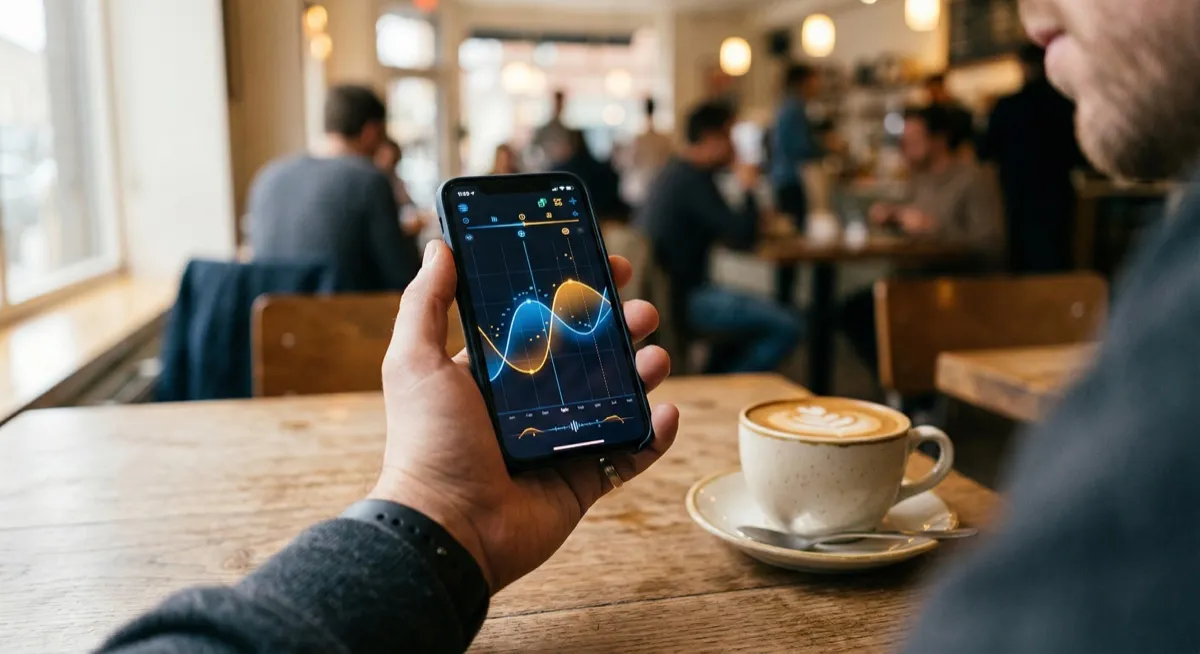
FocusCurve
is designed specifically for this kind of scenario. The app lets you log both your ADHD medication and your caffeine intake, then shows you an estimated combined timeline — so you can see when both substances are expected to be active and when they are expected to clear. It accounts for personal modifiers like oral contraceptive use and smoking status that affect your caffeine half-life.
Rather than guessing whether your afternoon coffee will interfere with tonight’s sleep, you can look at your estimated timeline and see the approximate answer. It is not a replacement for your prescriber’s advice, but it gives you a concrete visual tool to inform your own decisions and have more productive conversations with your doctor.
Frequently asked questions
Can I drink coffee while taking ADHD medication like Ritalin or Concerta?
Caffeine and methylphenidate are metabolized by different enzymes (CYP1A2 for caffeine, CES1 for methylphenidate), so they do not directly interfere with each other’s metabolism (NCBI NBK223808; PMC6581573). However, both are central nervous system stimulants, meaning their effects can add together. Many people in ADHD communities report increased anxiety or jitteriness when combining them. Whether and how much coffee works for you is an individual question best discussed with your prescriber, informed by your own experience with timing and side effects.
How long does caffeine stay in your system?
Caffeine has an average half-life of approximately 5 hours in healthy adults, with a wide individual range of 1.5 to 9.5 hours (NCBI NBK223808). This means that roughly half of the caffeine from your coffee is still active 5 hours later. Several factors can change this significantly: oral contraceptives roughly double the half-life (NBK223808), smoking reduces it by 30–50% (Parsons & Neims, 1978), and pregnancy can extend it substantially. Higher caffeine doses also tend to produce longer half-lives, ranging from approximately 4 hours at low doses to 8.7 hours at high doses (NCBI NBK532910).
Does caffeine cancel out ADHD medication?
No. Caffeine does not cancel, block, or reduce the effect of methylphenidate or amphetamine-based ADHD medications. They work through different mechanisms: caffeine is an adenosine receptor antagonist (it blocks sleepiness signals), while methylphenidate primarily increases dopamine and norepinephrine availability (PMC6581573). When taken together, their stimulant effects are additive rather than opposing.
Why does coffee make my ADHD medication feel stronger or cause anxiety?
Because both caffeine and ADHD stimulant medications increase central nervous system activity, their effects stack. If your medication is already raising your alertness and sympathetic nervous system activity, adding caffeine on top of that increases the total stimulant load. This can push some people past their comfort threshold, producing jitteriness, anxiety, or a racing heartbeat. The effect depends on your individual sensitivity, the dose of both substances, and the timing. If this is a consistent problem, discuss it with your prescriber — adjusting caffeine timing or quantity may be more practical than changing your medication.
References
- Pharmacology of Caffeine. NCBI Bookshelf. ncbi.nlm.nih.gov
- Caffeine. StatPearls, NCBI Bookshelf. ncbi.nlm.nih.gov
- Caffeine Toxicity. StatPearls, NCBI Bookshelf. ncbi.nlm.nih.gov
- Blanchard J, Sawers SJA. The absolute bioavailability of caffeine in man. Eur J Clin Pharmacol. 1983. pubmed.ncbi.nlm.nih.gov
- Magkos F, Kavouras SA. Caffeine use in sports, pharmacokinetics in man, and cellular mechanisms of action. Crit Rev Food Sci Nutr. 2005;45(7-8):535-62. pubmed.ncbi.nlm.nih.gov
- Brachtel D, Richter E. Effect of altered gastric emptying on caffeine absorption. Z Gastroenterol. 1988;26(5):245-51. pubmed.ncbi.nlm.nih.gov
- Parsons WD, Neims AH. Effect of smoking on caffeine clearance. Clin Pharmacol Ther. 1978. pubmed.ncbi.nlm.nih.gov
- Baur DM, et al. Caffeine and sleep: EEG markers and dose-response relationships. J Sleep Res. 2024. onlinelibrary.wiley.com
- PharmGKB Methylphenidate Pathway. Pharmacogenet Genomics. pmc.ncbi.nlm.nih.gov
- Stein MA, et al. ADHD Treatments, Sleep, and Sleep Problems. Child Adolesc Psychiatr Clin N Am. 2012. pmc.ncbi.nlm.nih.gov
Medical disclaimer
This article is for educational and informational purposes only. It is not medical advice, diagnosis, or treatment. The information presented is based on published research from FDA-approved prescribing information, peer-reviewed pharmacokinetic studies, and NCBI Bookshelf references, but it is simplified for a general audience and does not capture the full complexity of individual pharmacokinetics.
All half-lives, timelines, and percentages discussed are approximate population averages. Your individual experience may differ significantly based on your genetics, metabolism, body composition, other medications, and many other factors.
Do not start, stop, or change your medication based on this article. Always talk to your prescriber or doctor before making any changes to your treatment plan.
FocusCurve is a visualization and educational tool -- not a medical device. It does not provide medical advice, diagnosis, or treatment recommendations. All estimates shown in the app are approximate, based on generalized models and published population-average parameters.
- Caffeine
- Sleep
- Stimulants
- Metabolism